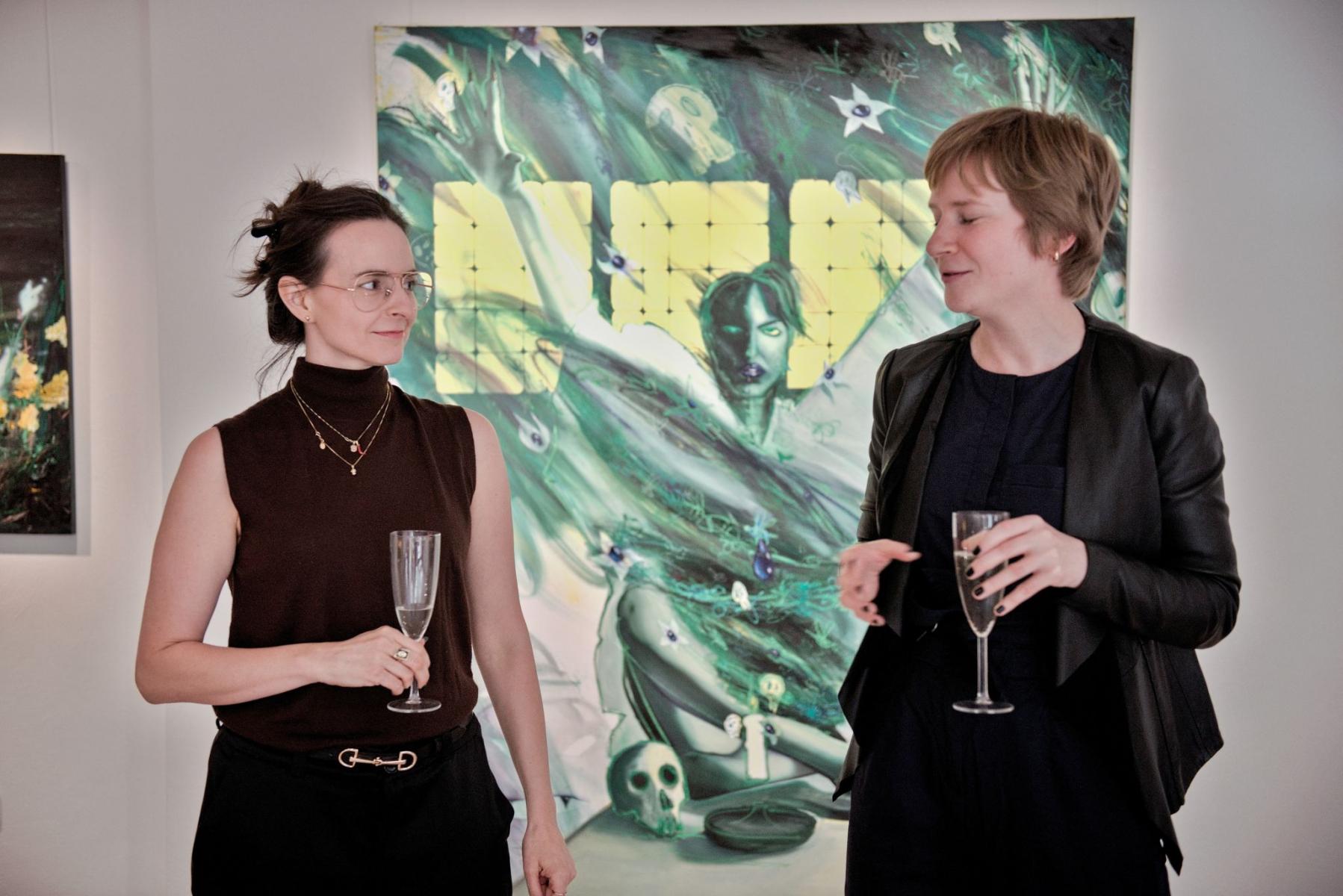
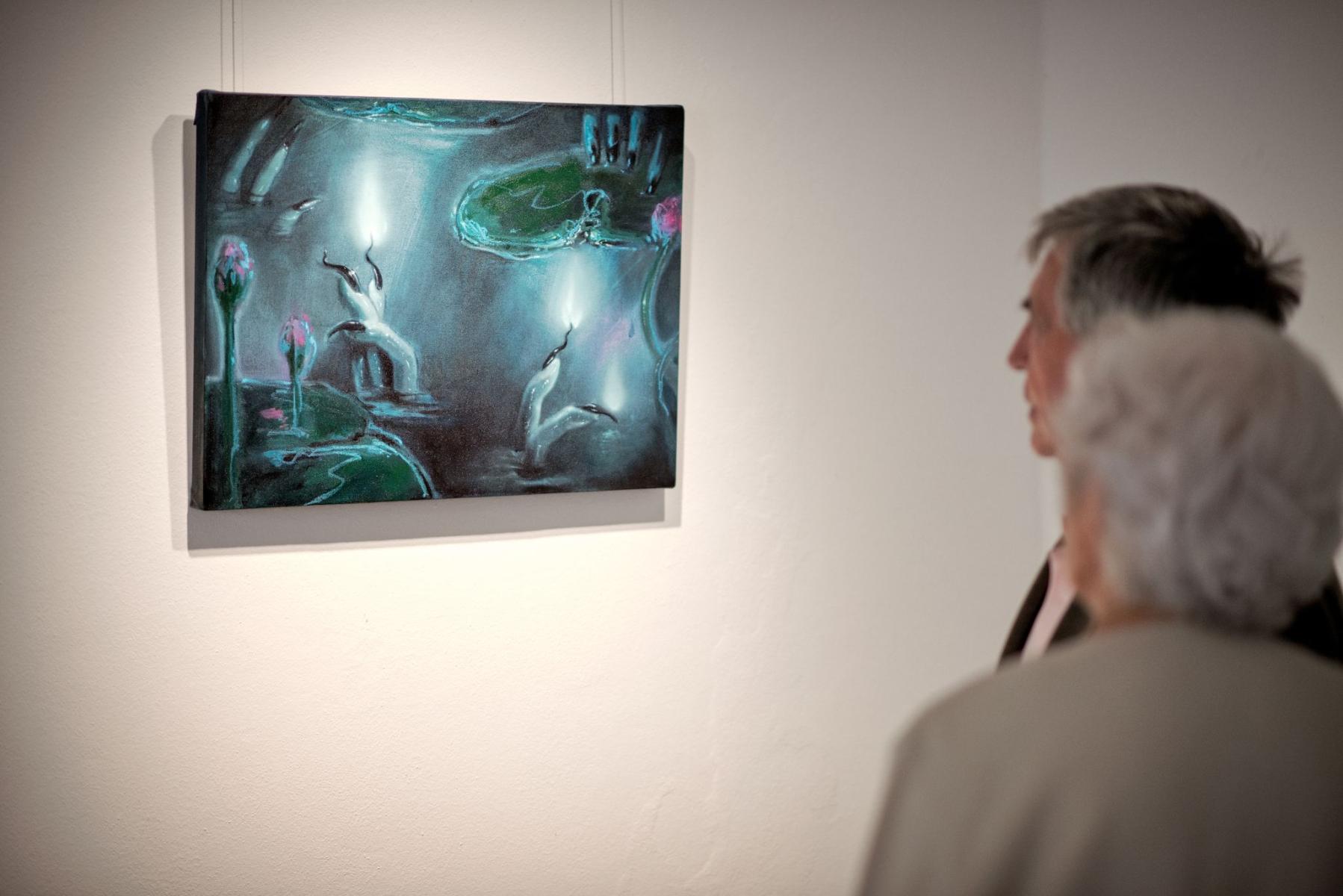
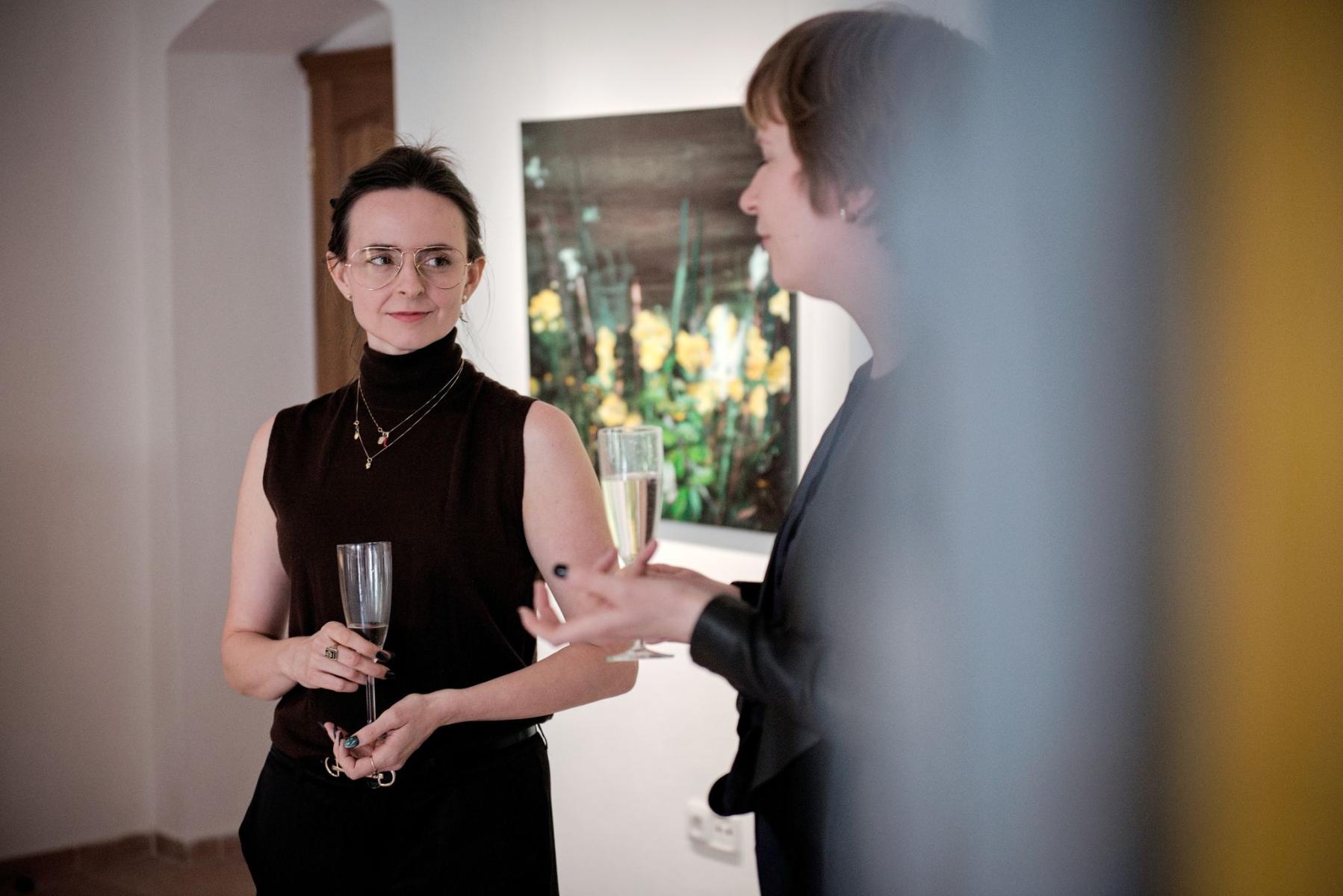
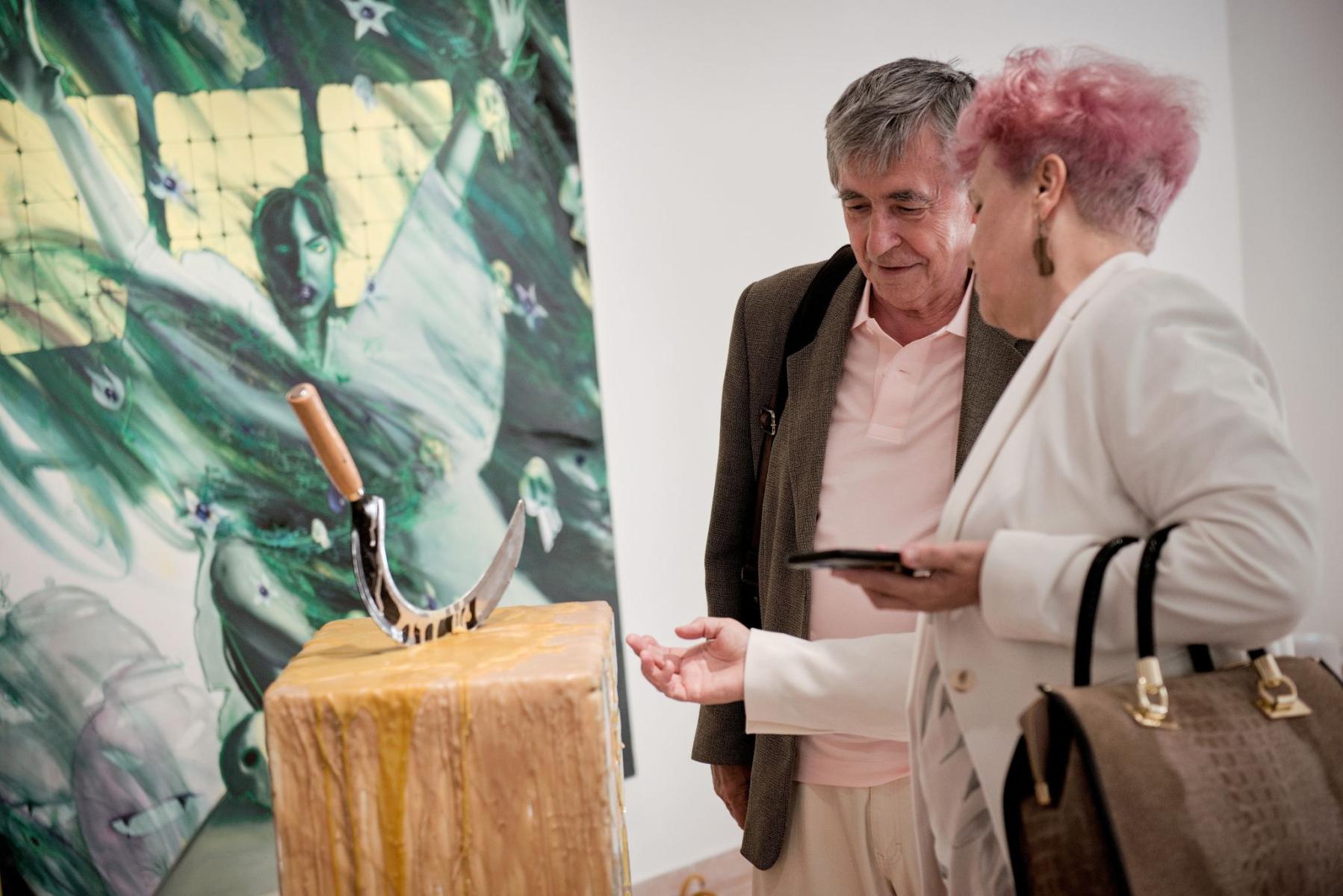
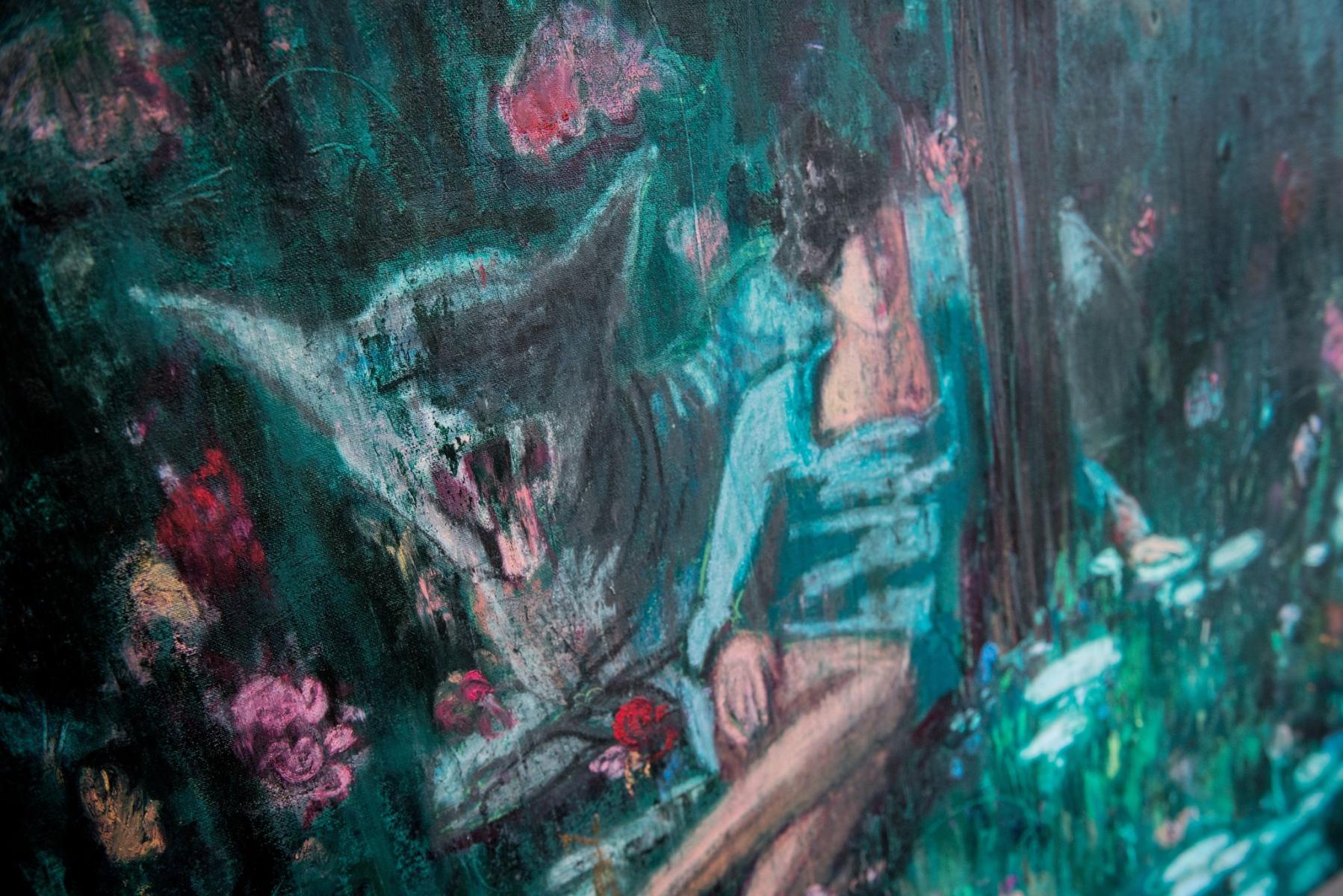
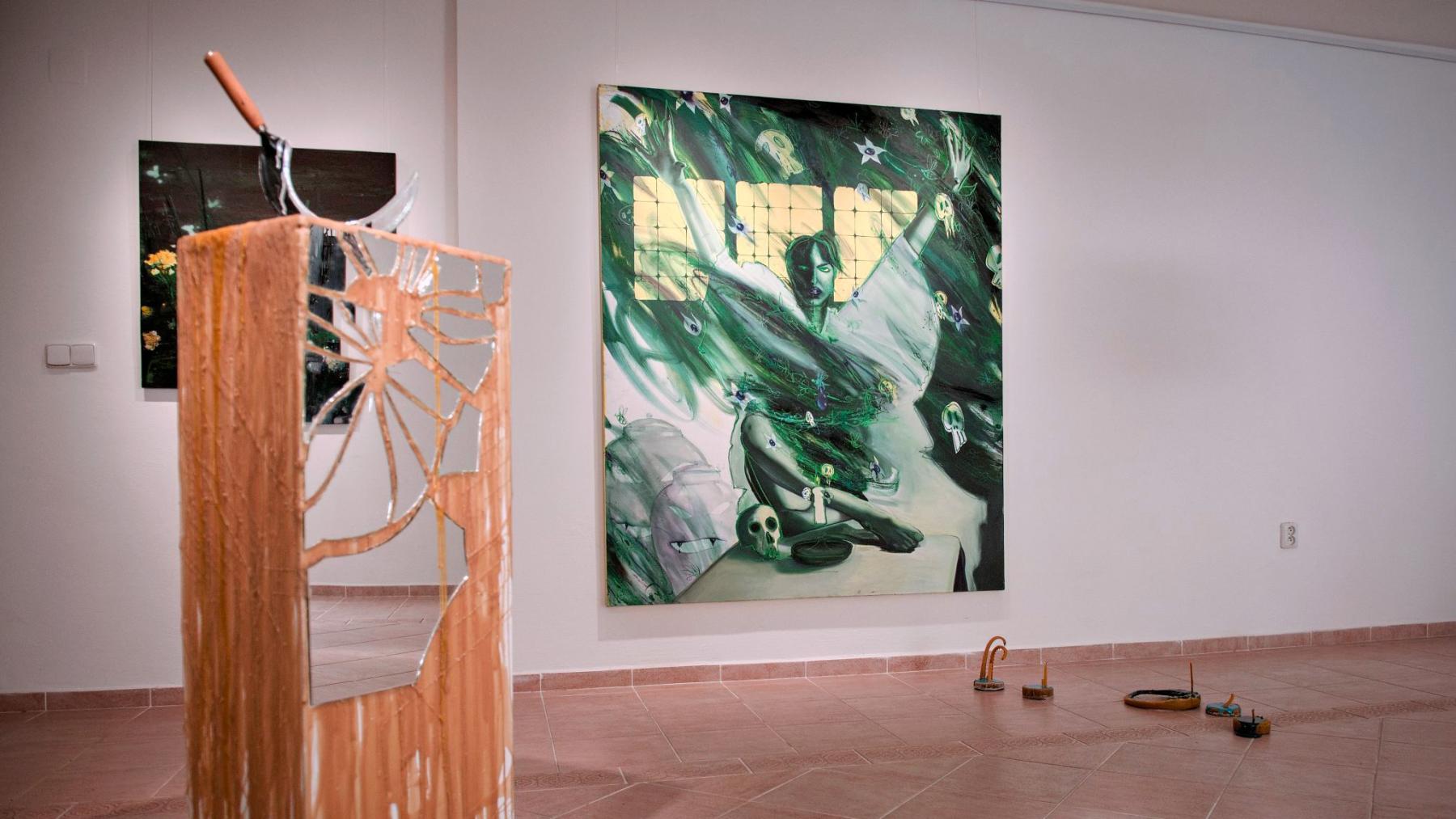
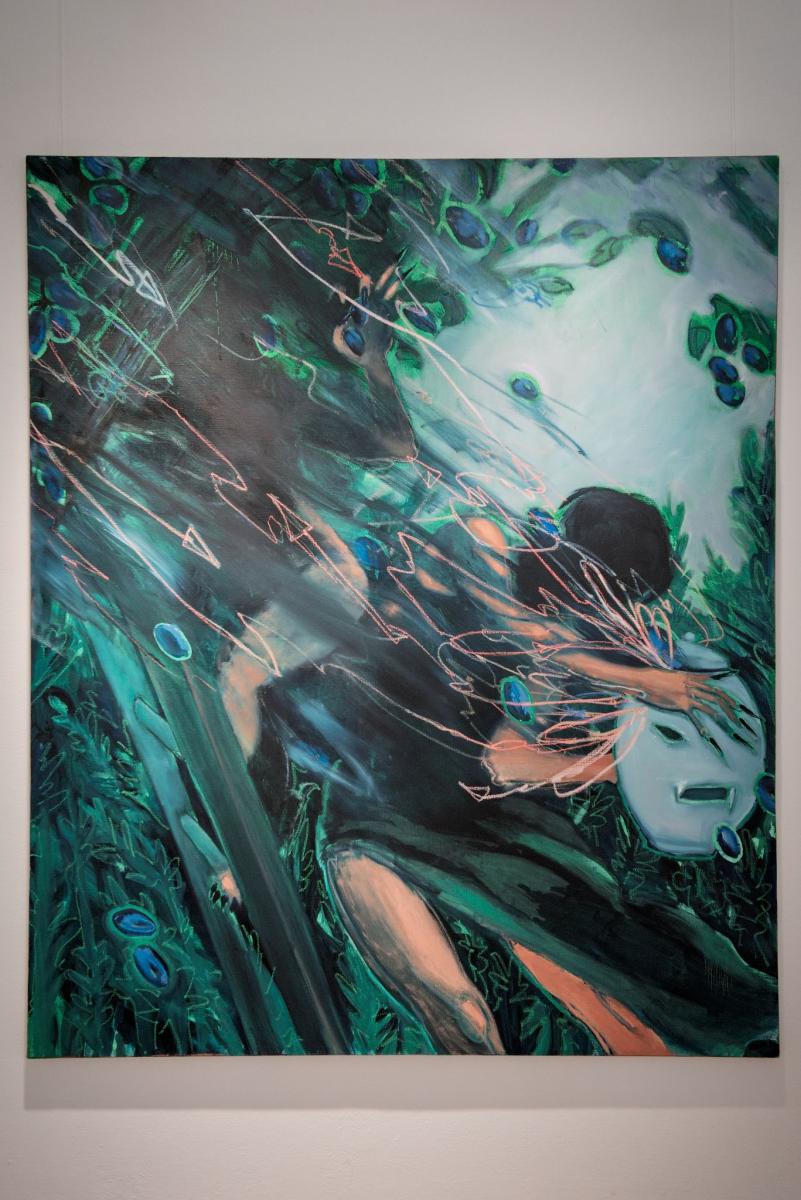
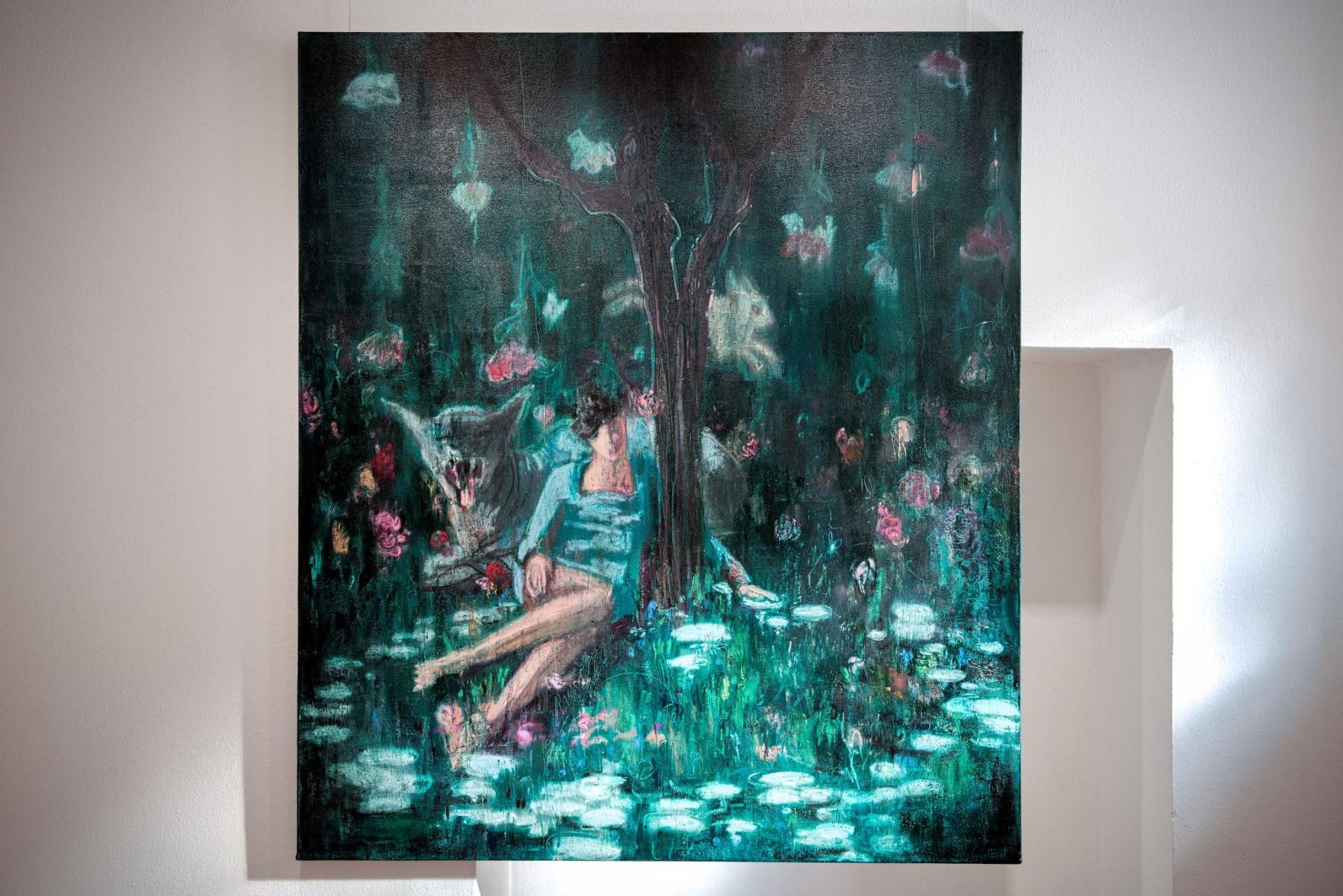
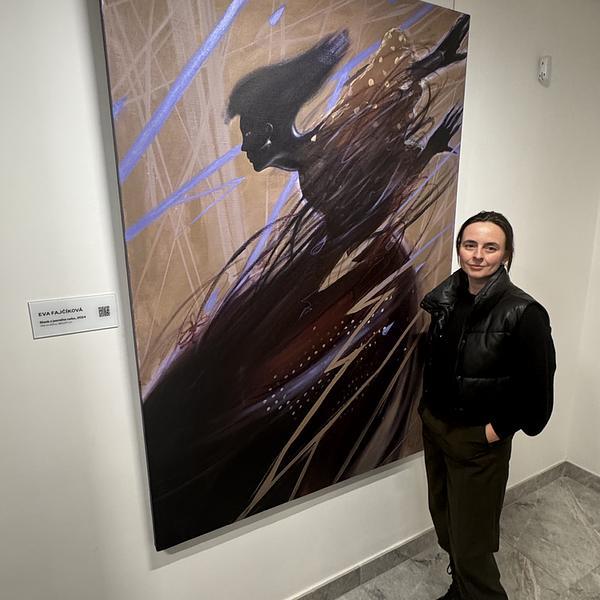
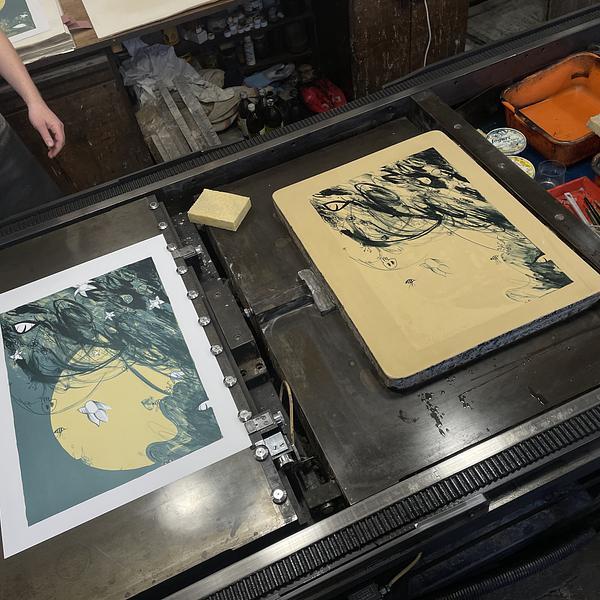
Each thematic painterly register — figurative painting, floral or Amanita still lifes — is developed by Fajčíková in a specific way. Sensually charged, not-quite-human figures are placed into a dynamic swirl that intensifies the tension of the scene. They often merge with the background, completely intertwined with the action. Fajčíková deliberately employs bold, contrasting cold and warm colors, as well as a poisonous green that could not be further from nature, yet serves as a faithful basis for expressing her untamed power. More textured details of plants reference haptic qualities and the spatial expansiveness of an all-encompassing flora. Gestural yet meticulously precise mark-making feels both emotive and deliberate, introducing additional, abstract layers of storytelling.
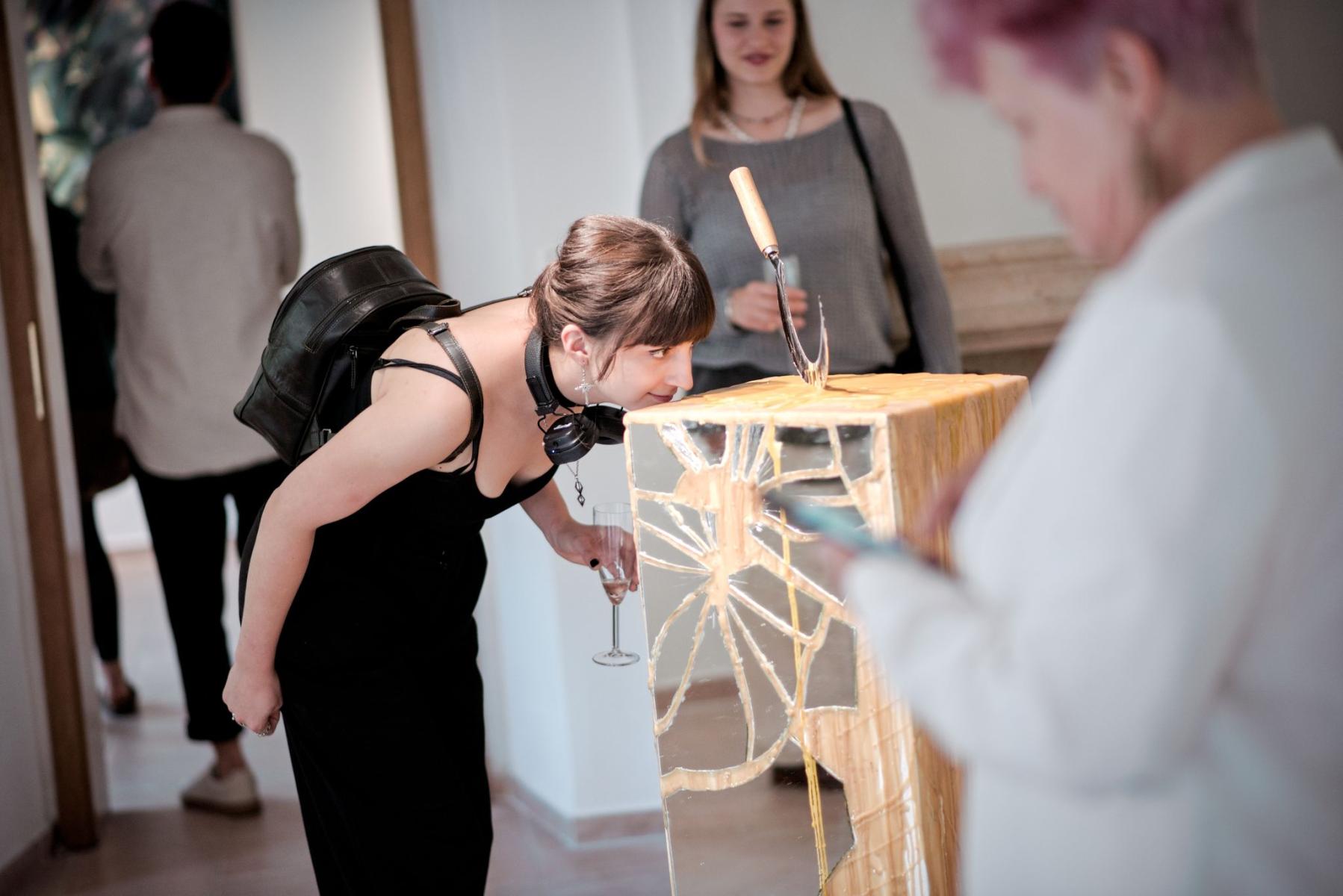
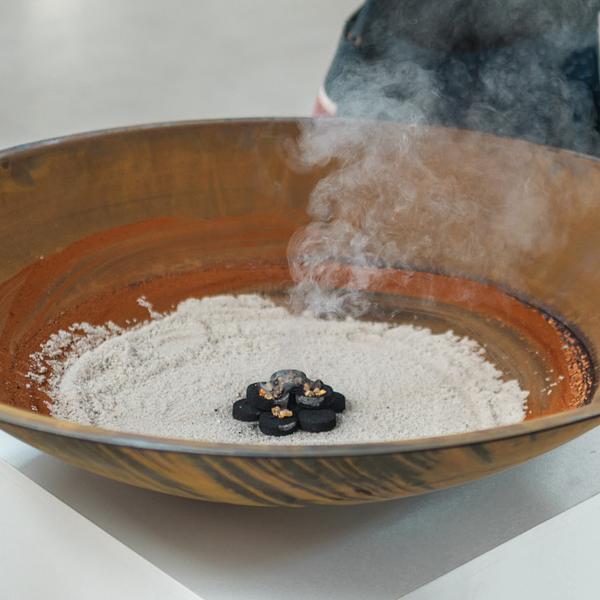
Fajčíková also fills the exhibition space with objects referencing rituals and symbols associated with these beings — wax, thorns, (broken) mirrors — interwoven with paintings depicting symbolically charged flowers (acacia — immortality)… An important and ephemeral element is scent, which may now feel somewhat mundane as it has moved from medicinal ointments and ritual oils into branded perfumes of everyday life. Yet scent can serve as an entry into memories of different environments and situations, evoking a range of emotions. The smell of forest soil after rain, the scent of a lover… Some scents, however, seem to precede experience, and we can identify them even without prior encounter — the smell of death and decay…
Within the proverb that inspired the exhibition’s title — “Those who sow the wind, reap the storm” — there emerges a cautionary aspect, urging care or fear, primarily of evil actions and their consequences. Yet in the context of Fajčíková’s exhibition, reaping the storm represents a transcendental and transformative experience: the acceptance of the power of the unpredictable and the insight and agency that flow from it. The storm activates the growth of fungi not only through rainfall but also via lightning, accelerating mutual communication and spreading spores across the forest. The unpredictable and invisible to the naked eye transforms into something life-giving and essential, governed, paradoxically, by chaos.
Eva Fajčíková’s solo exhibition *Reaping the Storm* connects the artist’s interest in capricious phenomena, such as weather or the existence of supernatural beings, for which different cultures have their own mythologically rich explanations and rituals. She is drawn to moments that reveal their absolute elusiveness to reason, as well as their fascinating interconnections or gendered, often stereotypical interpretations. Phenomena of entropy, storms, and female vampirism intertwine in Fajčíková’s complex undergrowth of painterly and sensually immersive elements. What—or who—emerges from the chaos of roots, limbs, blood, spores, and stardust?
Miroslava Urbanová